
Top 5 Digital Trends Every PR Professional Should Know
- Mariana Lema

- Dec 13, 2024
- 4 min read
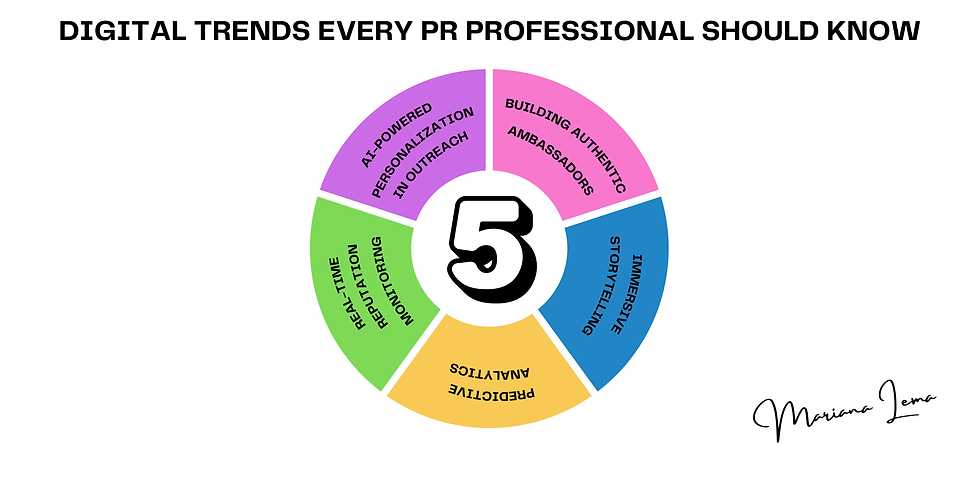
As technology continues to reshape the way we communicate, staying ahead of digital trends is no longer optional — it’s essential. PR professionals today need to embrace new tools and strategies that allow them to engage audiences in innovative and effective ways. Here are five digital trends that are defining PR in 2025 and beyond:
1. AI-Powered Personalization in Media Outreach
Artificial intelligence (AI) is no longer just a buzzword in PR. It’s now a powerful tool that enables professionals to craft hyper-targeted media outreach at scale. AI is transforming how we analyze journalists' preferences, past coverage, and even tone, allowing for highly personalized, data-driven pitches.
✍️What you need to know:
AI tools like Prowly, Meltwater, and Cision can help you automate the personalization of your pitches, meaning you can reach the right journalists with content that resonates with them. Instead of generic outreach, you’ll be able to tailor each communication based on the journalist’s past work, leading to higher response rates and more meaningful media coverage.
🧠Why it matters:
Personalized outreach not only increases your chances of securing media coverage but also strengthens your relationship with journalists, making them more likely to work with you again in the future.
2. From Influencers to Advocates: Building Authentic Brand Ambassadors
Influencer marketing is evolving. In 2025, it's no longer just about working with influencers for one-off promotions. Instead, PR professionals are building long-term partnerships with influencers who genuinely align with the brand’s values. These brand advocates are authentic, passionate, and trusted by their audiences.
✍️What you need to know:
Brands like Patagonia and Glossier have already moved from transactional influencer partnerships to long-term relationships that are based on shared values and mutual trust. Influencers are no longer just marketing tools; they’re key parts of the brand’s community.
🧠Why it matters:
When influencers align with your brand’s mission and message, the authenticity shines through, leading to better engagement and more loyal customers. It's about fostering a deeper connection, not just a transaction.
3. Interactive & Immersive Storytelling: Moving Beyond Static Content
Video has always been an important medium in PR, but the future is more immersive and interactive. 360-degree videos, augmented reality (AR), and interactive microsites are pushing the boundaries of storytelling, allowing audiences to become active participants in the brand’s narrative.
✍️What you need to know:
Consider incorporating AR in your campaigns, whether it’s creating interactive product experiences or building virtual showrooms. Brands are also experimenting with interactive video content that lets viewers choose how the story unfolds, creating a more engaging experience.
🧠Why it matters:
As audiences increasingly expect dynamic content, this shift allows your PR campaigns to stand out in a crowded media landscape. The more immersive the experience, the deeper the engagement with your audience.
4. Data-Driven PR: Beyond Media Mentions to Predictive Metrics
PR is becoming more data-centric, with professionals now relying on predictive analytics to understand how their campaigns will perform before they even launch. It’s not just about tracking media impressions anymore; it's about measuring campaign effectiveness and predicting ROI based on real-time data and historical patterns.
✍️What you need to know:
PR tools like TrendKite and Brandwatch now allow you to track sentiment, engagement, and even brand health across multiple touchpoints in real-time. This data gives you a deeper understanding of how your campaign is performing and lets you adjust your strategy on the fly.
🧠Why it matters:
By using predictive metrics, you can optimize campaigns in real-time, ensuring better results and a more efficient use of resources. It also gives you hard data to present to clients or stakeholders, demonstrating your campaign’s impact in a tangible way.
5. Real-Time Reputation Monitoring: Staying Ahead of the Crisis
Reputation management has always been at the heart of PR, but in 2025, it’s become a 24/7 job. Social media and online forums can amplify public opinion rapidly, making real-time monitoring essential for keeping a brand’s reputation intact. The ability to respond to a crisis before it escalates is crucial.
✍️What you need to know:
Tools like Sprinklr, Brandwatch, and Hootsuite provide real-time social listening, allowing you to monitor what people are saying about your brand, identify emerging issues, and act before they turn into full-blown crises.
🧠Why it matters:
Being proactive rather than reactive in managing a brand’s reputation can make all the difference in maintaining public trust. Real-time monitoring gives you the power to nip potential crises in the bud, ensuring that your brand’s reputation stays strong no matter what.
Final Thoughts
The 5 digital trends you learned about today are evolving at lightning speed, and as PR professionals, we need to know them stay ahead of the curve. Whether it's leveraging AI for personalized outreach, using data to predict campaign performance, or embracing immersive content, adopting these trends will not only keep you competitive but also help you create more meaningful connections with your audience. The future of PR is digital, and the best way to succeed is to embrace the changes and keep experimenting.
Which of these trends are you most excited to incorporate into your strategy this year? Let me know in the comments!


Comments